–
–
–
–
–
–
–
–
–
–
–
–
–
–
Gorealla — Technology that listens, not dictates
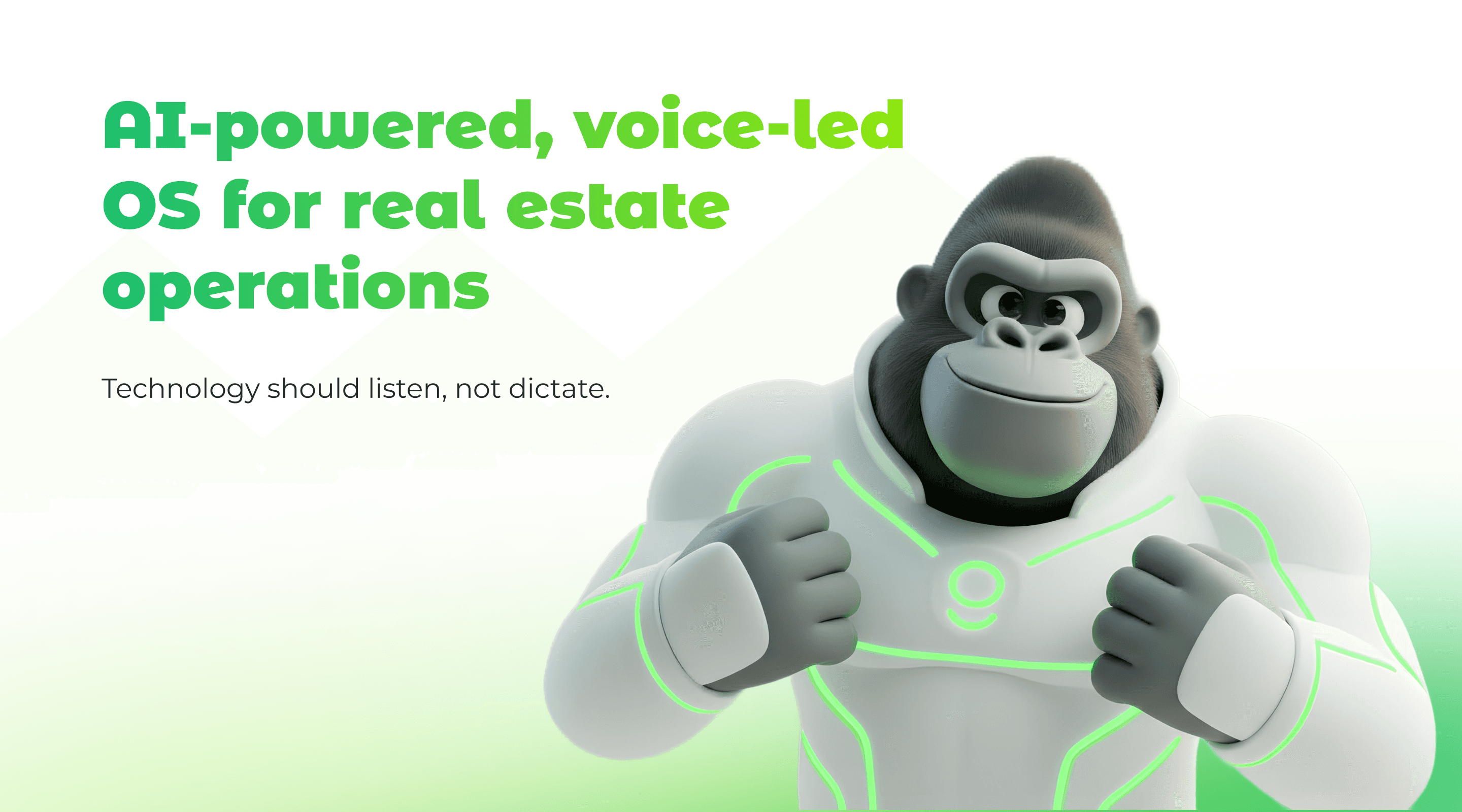
Gorealla is an AI-powered, voice-led operating system designed to run the day-to-day reality of real estate operations — from construction sites to leadership dashboards — using natural language instead of forms.
Real estate work already happens through conversations. Gorealla turns those conversations into coordinated, real-time action.

North Star:
Turn everyday operational conversations into structured execution across sites, teams, and leadership.
Role
Senior Product Designer
(End-to-end UX)
Scope
Web platform with mobile support
(Enterprise AI Platform)
Duration
Multi-quarter
(Product evolution)
Focus Areas
AI-first interaction, system design, multi-role workflows
Team
Product, Engineering, Business, and Real Estate domain experts
Confidential data masked
Problem Space
Real estate operations are fundamentally fragmented.
Teams operate across WhatsApp, Excel, calls, and disconnected tools
Updates are manual, delayed, and fragmented across roles
Leadership spends time chasing status instead of making decisions
–
–
–
Most tools digitize forms — not how real estate actually works.
–
–
–
–
Design Challenge
How might we design an operational system that aligns with how real estate teams actually work, conversationally, across departments, while still maintaining structure, traceability, and control?
Key constraints:
Multiple departments, each with different mental models
Complex physical hierarchies (sites, wings, floors, units)
High need for auditability and trust
Product Vision
A voice-first operating system — not another tool
Gorealla was envisioned as:
Voice-first by default
Manual-first only when needed
System-led, not screen-led
–
–
–
Structural Foundation: Mapping the Physical World
Before intelligence could exist, the physical world had to be structured.
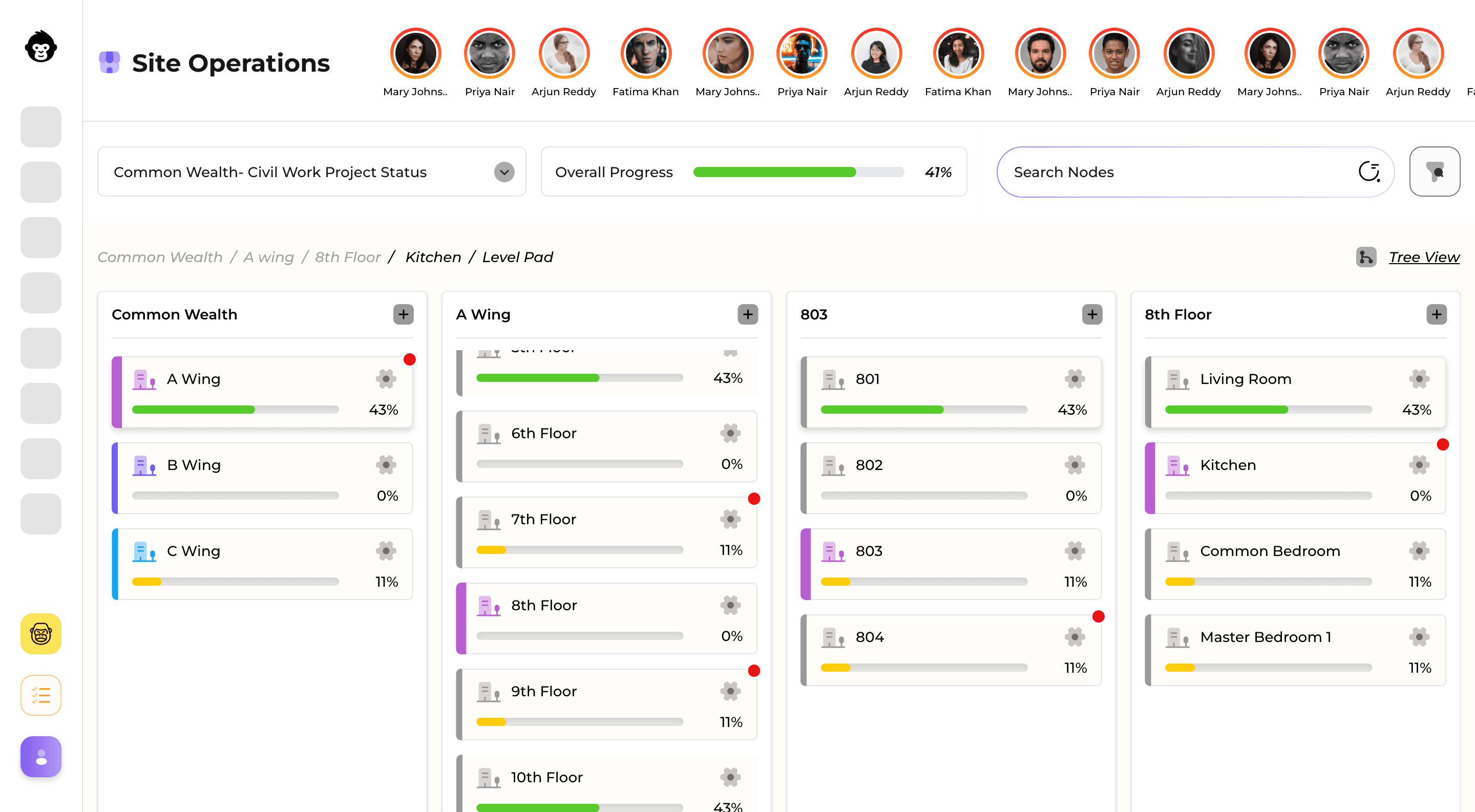
Real estate projects are hierarchical by nature:
I designed a project tree system that mirrors real-world construction logic and becomes the single source of truth for all operations.
This structure powers:
–
–
Progress tracking
–
–
Dependencies
–
–
Cost mapping
–
Issue escalation
–
Cross-team visibility
Voice-First Interaction (with manual transparency)

Design Principle
Voice is the primary interaction. Manual interfaces exist
for transparency, audit, and control, not as the main workflow.
Example user intent (spoken or typed):
"Create an indent for 20mm rebar at Site A."
What happens automatically:
Voice or chat captures intent in natural language
AI parses intent into structured actions (indent, approval, update)
Users can review, edit, and audit the generated record
All operations in Gorealla start as conversations, voice or chat, not forms.
–
–
–
AI Teammates:
Human-Centered System Design

Key Differentiator
Enterprise systems fail when users must learn how software thinks. Gorealla flips this by giving intelligence a human mental model.
Each mascot represents:
A department
A mindset
A type of intelligence
These are not characters or branding elements, they are mental models for how intelligence is distributed across departments.

People don't say:
"The finance module flagged a variance."
They say:
"Fox flagged a cost risk."
–
–
–
This dramatically improves:
Adoption
Trust
Cross-team communication
–
–
–
–
–
–
–
–
Impact & Outcomes
While Gorealla is a system-level product, early outcomes showed:
Significant reduction in follow-ups
Faster procurement cycles
Improved visibility across teams
Higher adoption due to voice-first + mascot-led interaction
More importantly, technology started adapting to people — not the other way around.
Key Design Learnings
Voice works when systems understand context, not commands
Manual interfaces increase trust when positioned as transparency
AI adoption improves when intelligence feels relatable
Complex systems need strong mental models, not more screens
Closing Thought

Gorealla is not a feature-led product.
It is a behavior-aligned operating system.
By designing for conversation, intent, and system intelligence, Gorealla reimagines how large, complex real estate organizations operate — in real time.
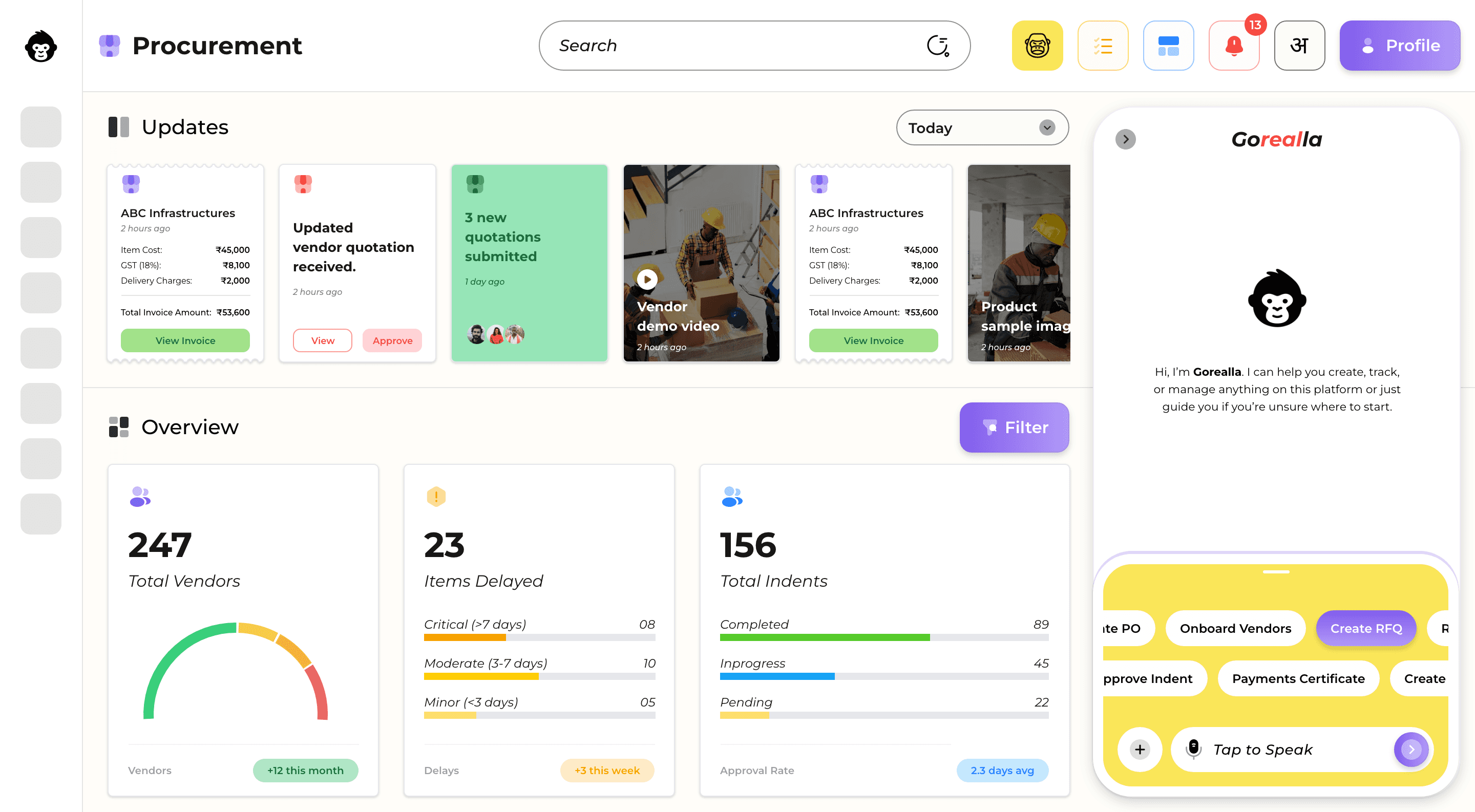
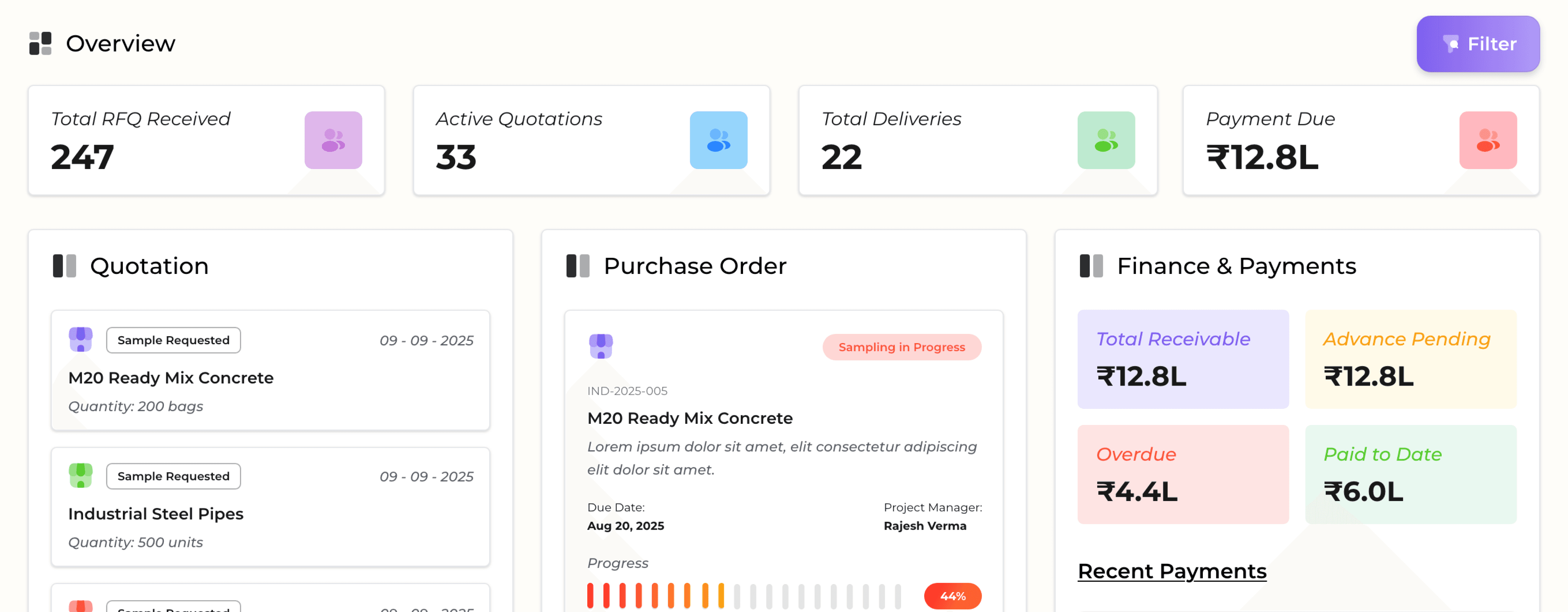
Multi-Role Dashboards
The same data powers different views:
Site teams
see execution
Procurement
sees movement
Finance
sees burn & forecast
Leadership
sees risk & progress
No duplicate reporting. No status chasing.
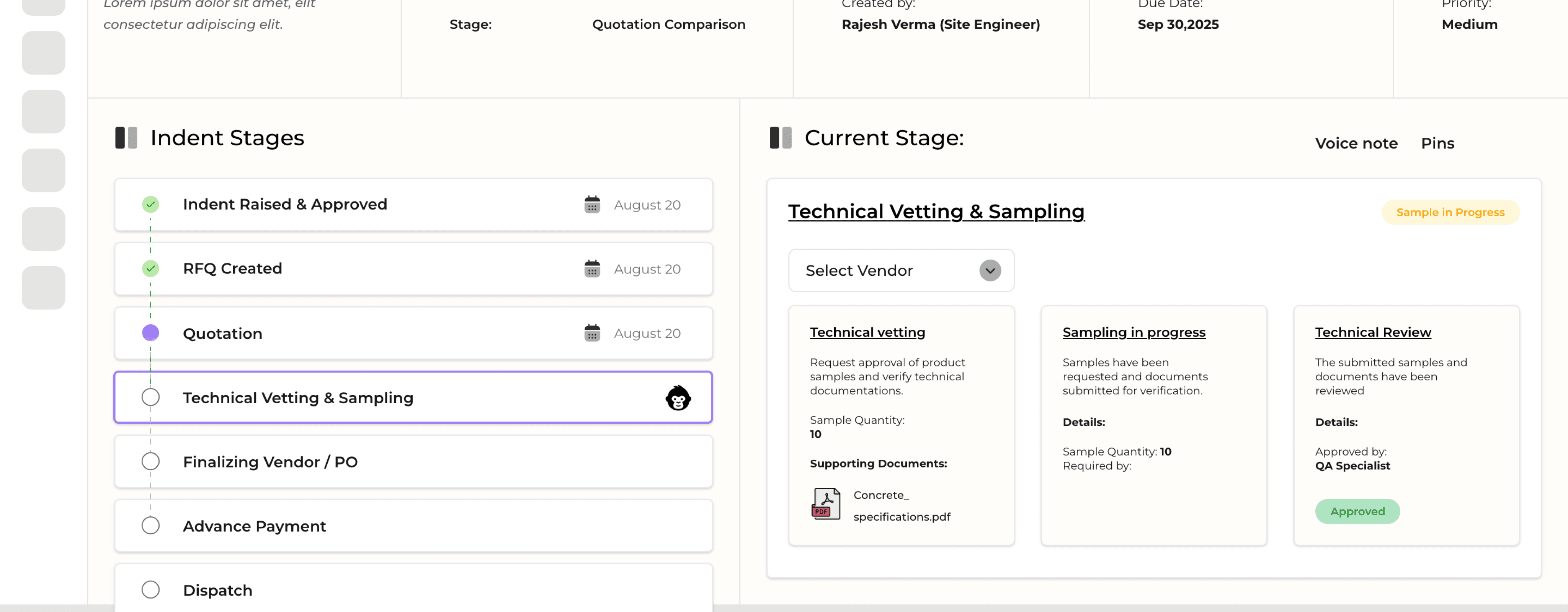
End-to-End Flow (Golden Path)
From intent to execution — without coordination overhead
Scenario
A site engineer needs 20mm rebar for foundation work — a common request that typically involves multiple calls, WhatsApp messages, and manual tracking across departments.
Traditional
3-5 days
90% faster
With Gorealla
4-6 hours
Process Step
Traditional Process
Gorealla Process
2-4 hours
Multiple calls & emails
30 seconds
Voice command parsed, indent created automatically
1-2 days
Manual vendor outreach
🐿️
Procurement
Squirrel receives indent
4-8 hours
Manual budget approval
🦊
Finance
Fox validates budget
1-2 days
Manual quote comparison
✓
Vendor Response
Quotes received
2-4 hours
Manual logging & verification
📦
Quality Control
Material delivered & verified
Manual reporting
End of day updates
1 minute
Auto-routes to vendors, initiates RFQ
15 seconds
Parallel budget check, burn rate analysis
2-3 hours
Auto-comparison, delivery tracking
10 minutes
GRN logged, inventory updated
Instant
All metrics auto-updated
📊
Leadership Dashboard
Real-time visibility
90%
Time Saved
From days to hours
15+ → 1
Manual Touchpoints
One voice command
100%
Real-time Visibility
Across all teams
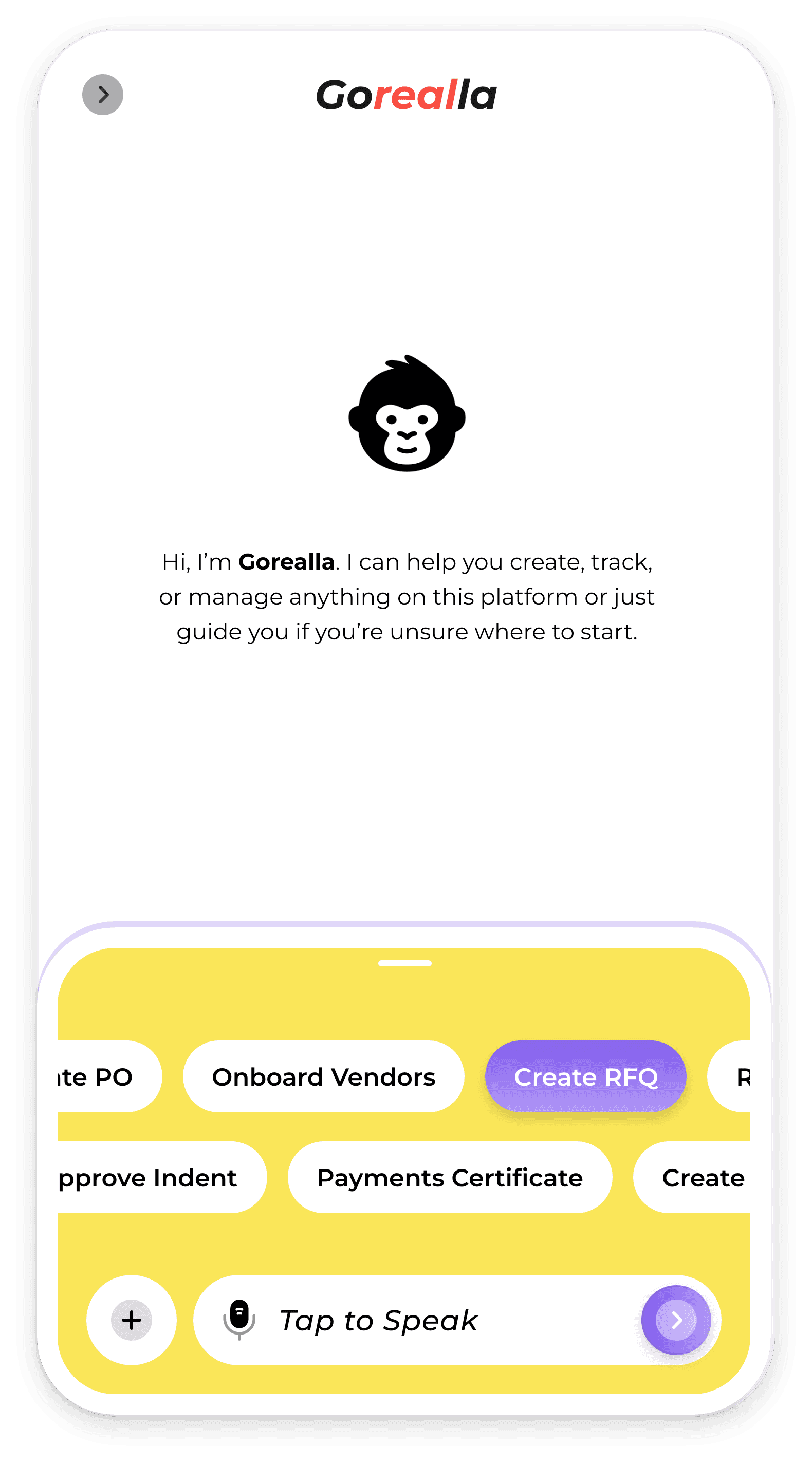
A single operational surface where conversations turn into execution.
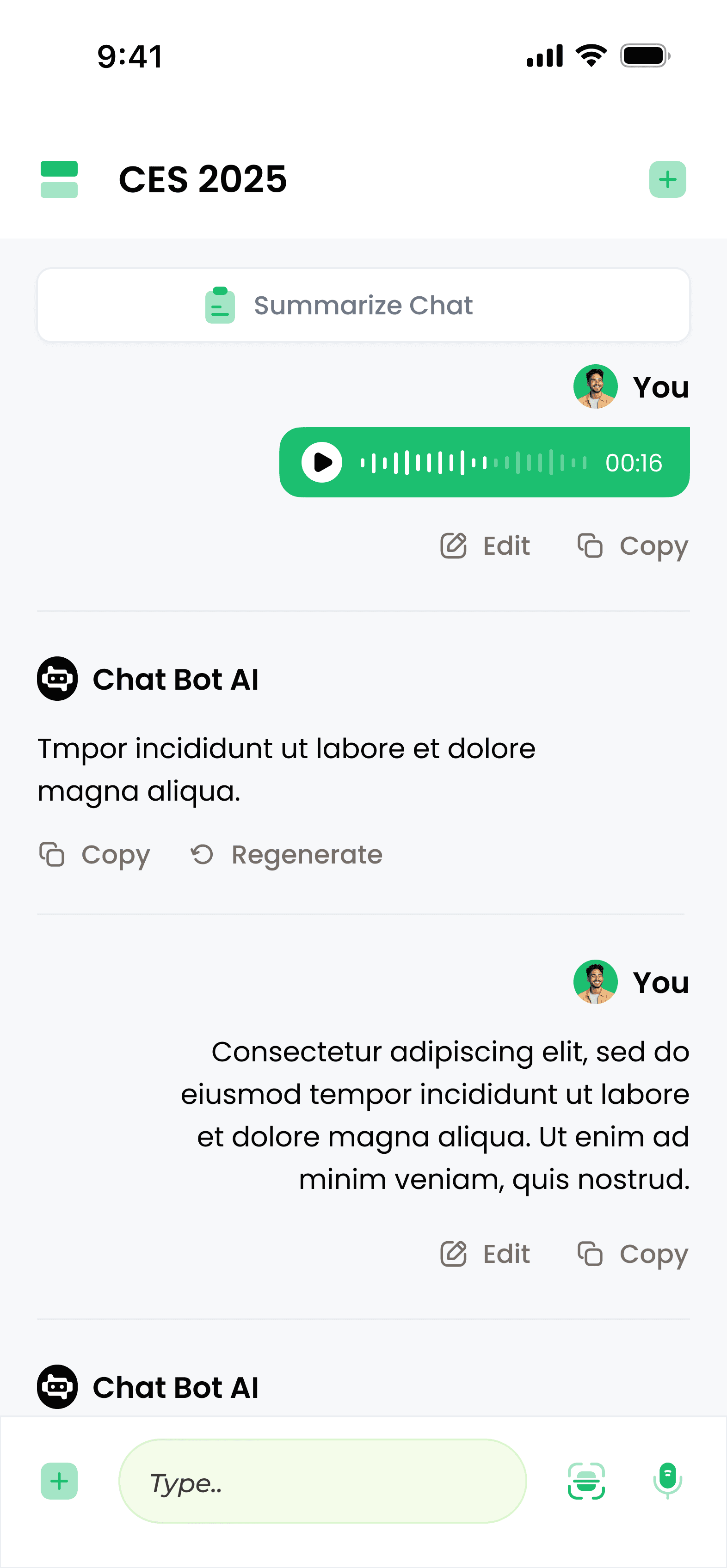
🦍
Gorealla
Site Operations (execution, progress, issues)
🐿️
Squirrel
Purchase & Procurement (RFQs, vendors, follow-ups)
🦅
Eagle
Sales & CRM (leads, commitments, forecasting)
🦊
Fox
Finance & Accounts (budgets, overruns, approvals)
🕊️
Pigeon
Liaison & Compliance (coordination, handoffs)
🦉
Owl
Legal & Documentation (contracts, audits)
🦍
Site Operations
Engineer identifies material need